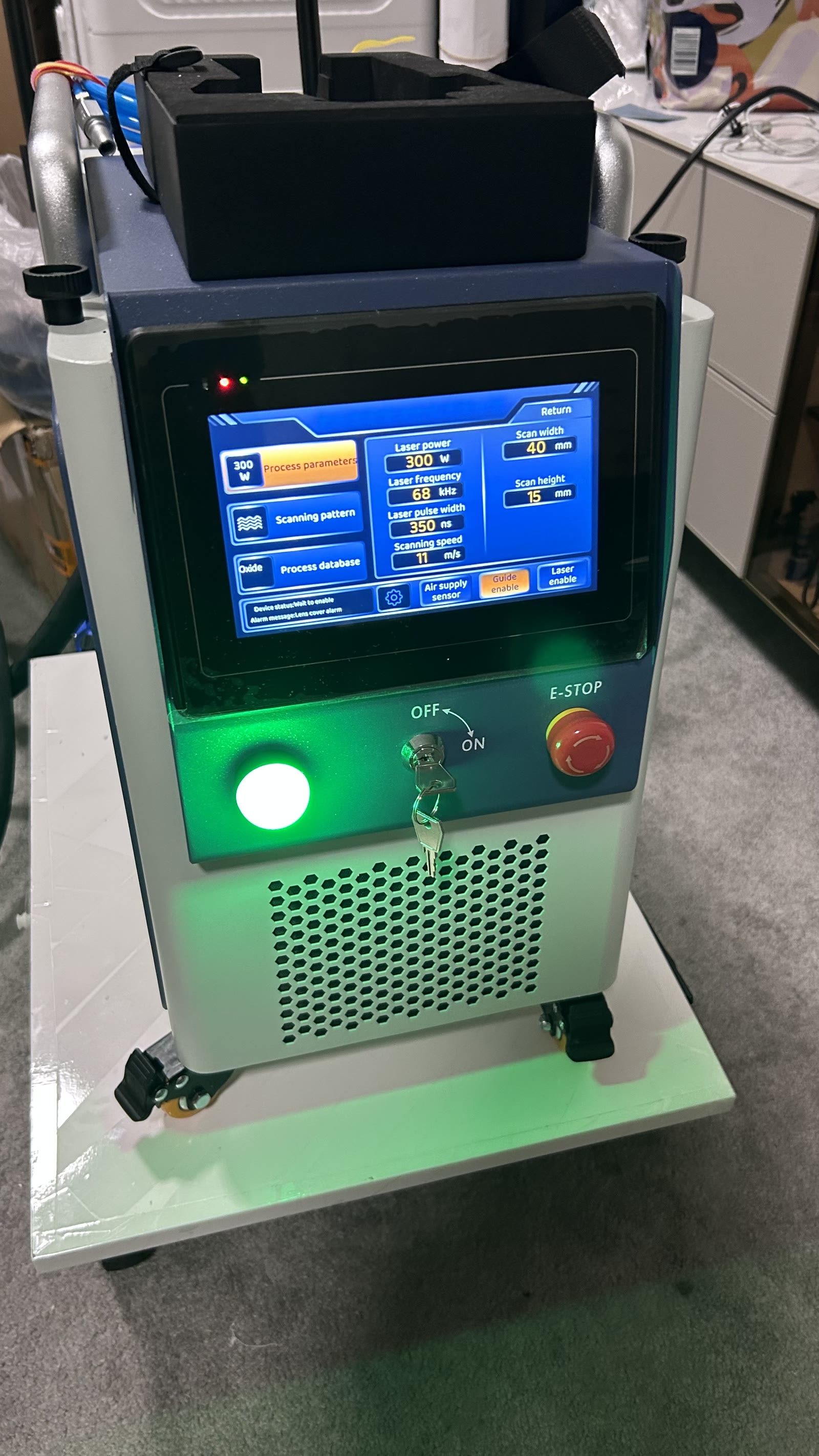
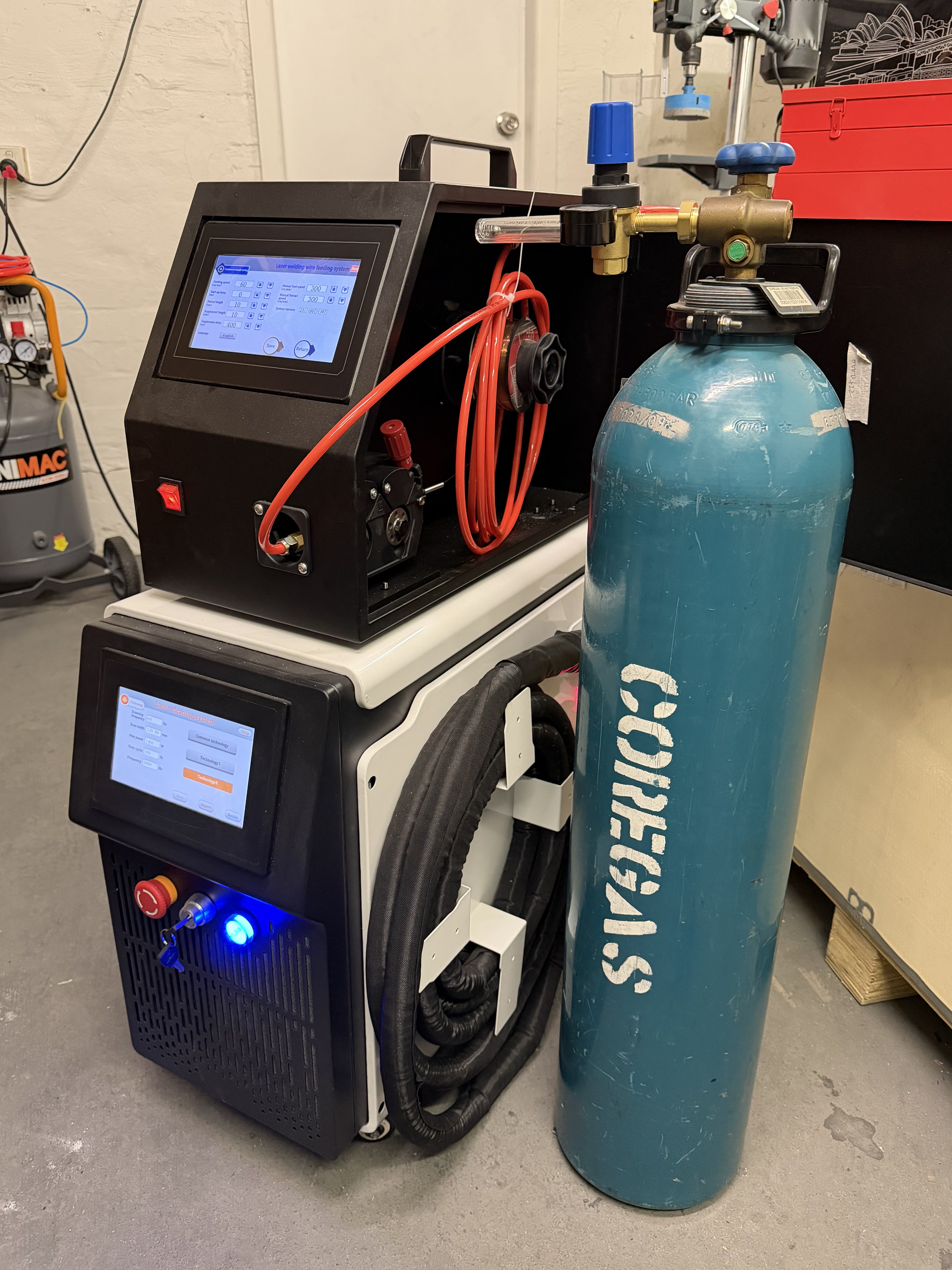
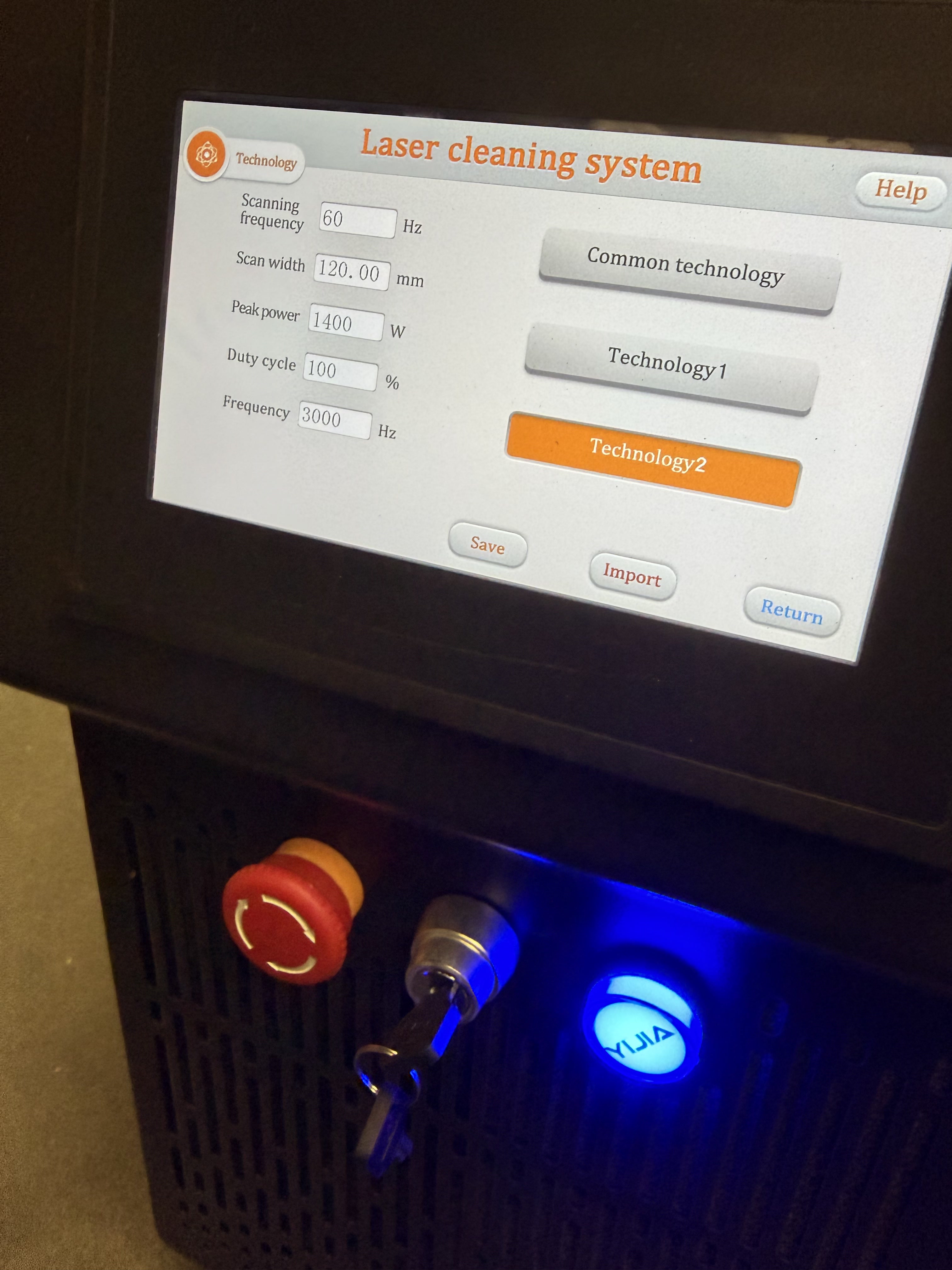
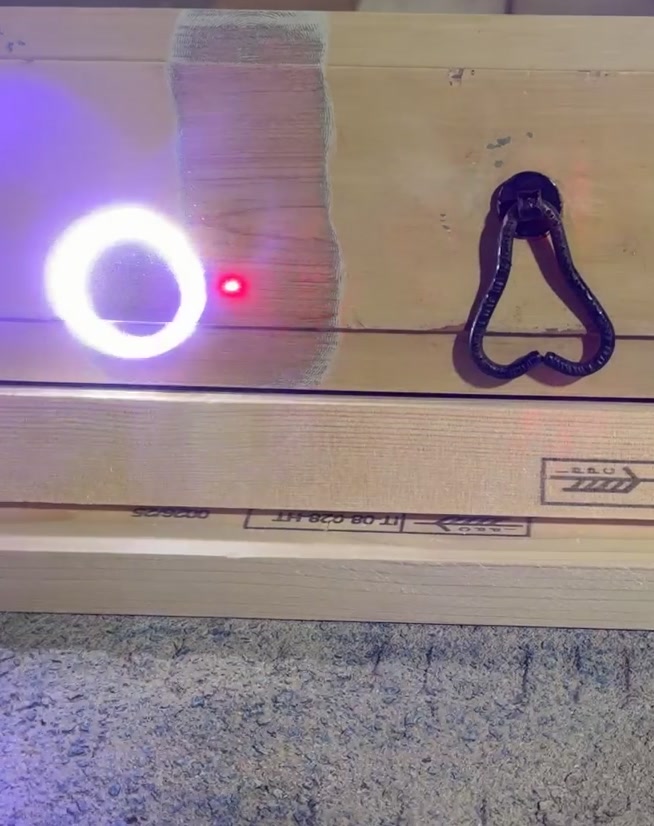
A pulsed fiber laser delivers very short bursts of high-energy light at 1064 nm. Contaminants — rust, paint, coatings, oxide layers — absorb the energy and ablate away. The underlying substrate absorbs much less and stays essentially intact.
That's the whole principle. The control sits in the parameters: pulse rate, pulse energy, scan width, pass count, all tuned against the specific material response. Done well, you can lift a millimetre of rust off a chassis section without touching the metal underneath.
What's different from media blasting: no abrasive contact, no media to clean up, no chemicals to dispose of, no warping from grit impact, no rounding of stamped lettering. The trade-off is throughput — laser is slower per square metre on heavy bulk work, but cleaner and more controllable on detail work.
What's different from chemical stripping: no solvent, no waste stream, no health risk to bystanders, no substrate attack from acid. Same trade-off applies — laser is the precision option, not the bulk-throughput option.
Class4 (highest)
Wavelength1064 nm
ProcessSelective ablation
Substrate changeNil measurable
Media usedNone
Chemical exposureNone